Key Takeaways
- Ikarians are 2.5× more likely to reach 90 than Americans, with near-zero rates of dementia
- The Ikaria Study (1,400 participants) identified diet, naps, social ties, and natural movement as the primary longevity factors
- Ikarians eat a strict Mediterranean diet centred on legumes, wild greens, olive oil, and herbal teas — very little meat or sugar
- The afternoon nap is universal and linked to a 37% reduction in heart disease risk
- Longevity on Ikaria is not genetic — researchers believe it is almost entirely lifestyle-driven
- The island's panigiria (village festivals) and strong community bonds are considered as important as diet
In 1976, a Greek immigrant was told by nine American doctors that he had terminal lung cancer and six months to live. Thirty-seven years later, researchers went back to find him. He was still alive — tending his vineyard, drinking his wine, napping in the afternoon. His American doctors were all dead.
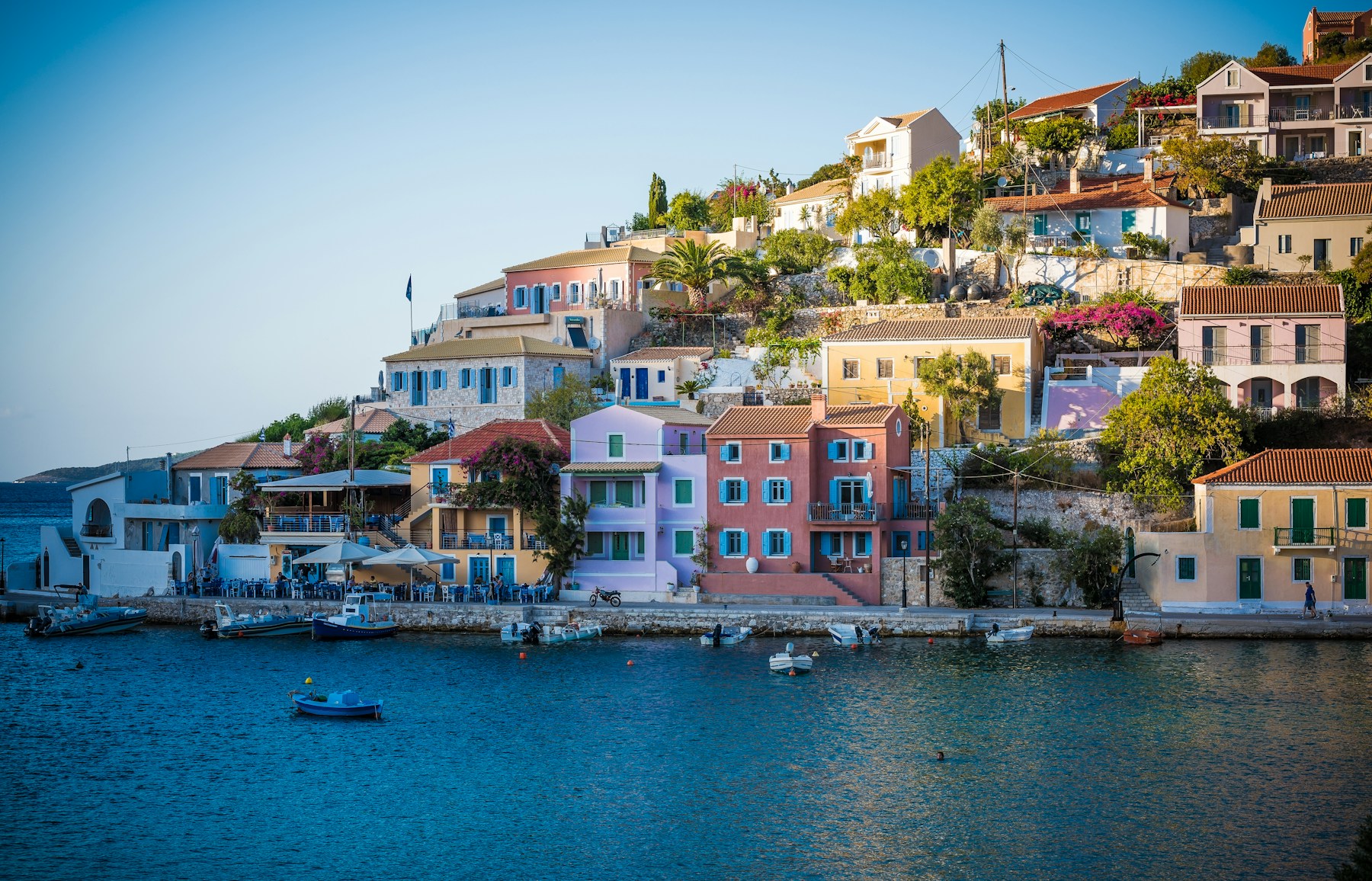
The man's name was Stamatis Moraitis. The island he returned to die on was Ikaria — a rocky, hilly Greek island in the Aegean Sea, about 35 miles from the Turkish coast. And his story, improbable as it sounds, is not entirely out of place there. Because on Ikaria, living to 90 is not exceptional. It is expected.
Ikaria is one of Dan Buettner's five Blue Zones — regions of the world where people consistently live to extreme old age in unusually good health. The others are Okinawa in Japan, Sardinia in Italy, the Nicoya Peninsula in Costa Rica, and Loma Linda in California. But Ikaria occupies a particular place in the longevity conversation — partly because the data is so striking, and partly because of stories like Stamatis.
2.5×
Ikarians are 2.5 times more likely to reach age 90 than Americans — and do so with significantly lower rates of dementia and depression
The Man Who Forgot to Die
The Story of Stamatis Moraitis
Stamatis Moraitis came to America after World War II, as so many Greeks did — chasing work, staying for a life. He settled in Florida, married an American woman, had three children, bought a house. He worked as a war veteran's counsellor and later ran a small business. By 1976, he was 66 years old and had built a decent American life.
Then came the diagnosis. Lung cancer, confirmed by nine different doctors. Six months, maybe nine. He could pursue aggressive treatment in America, they told him — but the prognosis was poor regardless.
Stamatis made a different calculation. If he was going to die, he wanted to die in Ikaria, where he was born. He and his wife moved back to live with his elderly parents. He stopped working. He started sleeping late, because what was the urgency? He let old friends come by. He began tending an old vineyard his father had left overgrown. He drank wine with neighbours. He sat in the village square. He went to the Orthodox church on Sundays.
He ate the food of the island — legumes slow-cooked in olive oil, wild greens foraged from the hills, goat's milk, honey from local hives, fish from the Aegean. He napped in the afternoon. And then he didn't die.
Months passed. A year. Then several years. His cancer — whatever had been happening in his body in America — seemed to have retreated. He felt stronger. He expanded the vineyard. By the 1990s, he had outlived every one of the nine doctors who had diagnosed him. When journalist Dan Buettner tracked him down in 2012 for the New York Times, Moraitis was 97 or 98 years old, still growing his own vegetables and making his own wine. He died in 2013, at around 100 years old.
The story is extraordinary — and it has to be held carefully. We cannot know for certain whether the original diagnosis was accurate, or whether what happened to Stamatis was biological or psychological or simply a function of living differently. But the story matters not because it proves anything on its own. It matters because it is so consistent with what the data shows about Ikaria as a whole.
What Makes Ikaria Different
Researchers from the University of Athens conducted the Ikaria Study, one of the most thorough examinations of the island's population. What they found confirmed what the anecdotes suggested: Ikarians reaching 90 at rates far above any Western average, with dramatically lower incidence of cardiovascular disease, dementia, and depression. One in three Ikarians makes it to their late eighties. Almost none have dementia.
The causes are not simple and probably not singular. Researchers have identified a constellation of factors — dietary, social, physical, psychological — that collectively seem to create conditions in which the body simply ages more slowly.
01
The Mediterranean Diet — Taken Seriously
The Ikarian diet is not a wellness trend. It is a centuries-old pattern built around what grows on the island: olive oil in extraordinary quantities (sometimes half a litre per person per day), legumes cooked long and slow, wild greens and herbs gathered from the hillsides, goat's milk and cheese, small amounts of fish, very little red meat, and local honey. Bread is eaten but refined sugar is largely absent. The diet is high in polyphenols, fibre, and monounsaturated fat — and remarkably low in processed anything.
02
Herbal Teas as Daily Medicine
Ikarians drink herbal teas the way other Mediterranean cultures drink coffee. The teas — made from wild rosemary, sage, oregano, mint, and artemisia gathered from the hillsides — are mildly diuretic, which researchers believe contributes to the island's remarkably low rates of hypertension. Many of these herbs are also rich in antioxidants and anti-inflammatory compounds. The afternoon tea ritual also serves a social function: a reason to sit, slow down, and talk.
03
No Concept of Time Urgency
Ikaria runs on its own schedule — famously. Shops open when they open. Meals happen when people are hungry. Visitors expecting punctuality leave frustrated. This is not dysfunction; it is a different relationship with time entirely. Chronic time pressure is one of the most well-documented drivers of cortisol elevation and cardiovascular damage. Ikarians are structurally insulated from it.
04
The Afternoon Nap
A 2007 Greek study of 23,000 adults found that regular nappers had a 37% lower risk of dying from heart disease than non-nappers. Ikarians nap. Not as a biohack or a productivity strategy — as a cultural norm, a natural rhythm of the day. The midday break is protected, unremarkable, and universal.
05
Movement Built Into the Landscape
Ikaria is mountainous and hilly. There is no flat. Getting anywhere — to the neighbours, to the garden, to the village square — requires walking uphill and downhill. This is not exercise in the Western sense of scheduled, discretionary activity. It is simply what the terrain demands. The result is that Ikarians accumulate several hours of moderate physical activity daily without ever setting foot in a gym.
06
Community as Infrastructure
Old people in Ikaria are not separated from community life. There are no retirement villages, no care homes in the Western sense. The elderly are embedded in family and village. They are needed — to tend animals, to watch grandchildren, to pass on knowledge. Loneliness elevates inflammatory markers, shortens telomeres, and kills on a timescale comparable to smoking fifteen cigarettes a day.
The Geology Hypothesis
One of the most intriguing — and controversial — findings from the Ikaria Study concerns geography. Researchers noticed something statistically strange: the longevity effect is significantly stronger in the north of the island than the south. Yet the populations share the same diet, culture, and gene pool.
Professor Christodoulos Stefanadis from the University of Athens, who leads the Ikaria Study, proposed one possible explanation: geology. The northern part of the island is dominated by granite rocks, which naturally contain trace amounts of uranium and emit very low doses of gamma radiation — between 0.20 and 3.31 millisieverts annually. This is roughly equivalent to a single chest X-ray over the course of a year.
Low-dose radiation exposure has been studied for decades under the theory of "hormesis" — the idea that very small amounts of a stressor can trigger protective biological responses. Whether Ikaria's geology genuinely contributes to its longevity remains unproven, but it has attracted serious scientific interest and points to how complex the Ikaria puzzle really is.
What researchers do agree on: the longevity seen in Ikaria is not primarily genetic. Studies of Ikarian emigrants who moved to Athens or Australia show dramatically reduced lifespans within a generation — suggesting the environment, not the DNA, is doing the work.
Red Wine, Greek Coffee and the Panigiria
Two things that don't feature in most longevity advice but are central to Ikarian life: wine and late-night festivals.
Ikarians drink local red wine — typically homemade, with no added sulphites — in moderate quantities, almost always with food and in company. The wine is high in polyphenols including resveratrol, which has attracted significant research interest for its potential role in cellular ageing. More practically, the ritual of sharing wine anchors social connection in a way that is difficult to disentangle from its biochemical effects.
Greek coffee — the strong, unfiltered kind prepared in a briki and drunk slowly — is also a daily fixture. A study published in Vascular Medicine found that Ikarians who drank one to two cups of Greek coffee daily had better endothelial function (healthier blood vessel walls) than those who drank other coffee preparations. The high antioxidant content of the slow-boiled, unfiltered coffee is believed to be the mechanism.
Then there are the panigiria — Ikaria's legendary village festivals, held in honour of Orthodox saints throughout the summer. They begin after midnight, last until dawn, involve live traditional music, dancing, locally produced food, and wine, and are attended by every generation simultaneously. Grandparents and grandchildren dance the same dances together. The festivals are not a tourism product; they are the social infrastructure of the island.
Dan Buettner has described the panigiria as one of the most powerful longevity mechanisms he encountered anywhere in his Blue Zone research — not for what people eat or drink, but for what the gathering does to a person's sense of belonging, purpose, and joy. Purpose and belonging, the research increasingly shows, are not soft lifestyle factors. They have measurable effects on inflammation, immune function, and cardiovascular health.
"It's not that Ikarians try to live longer. It's that their way of life happens to produce longevity as a side effect."
— Dan Buettner, Blue Zones researcher and author
The Ikaria Protocol: What You Can Actually Do
You cannot move to Ikaria. But the research identifies a set of behaviours that are replicable anywhere — and the evidence suggests they compound over time, just as they do on the island.
→
Eat legumes at least four times a week
White beans, lentils, chickpeas. Slow-cooked in olive oil with vegetables. This single dietary change is the most consistent predictor of longevity across all five Blue Zones, not just Ikaria.
→
Add a daily nap — even a short one
20–30 minutes between noon and 3pm. The cardiovascular benefit appears even at nap durations as short as 20 minutes, and the cortisol reduction is measurable within a week of consistent practice.
→
Replace one hot drink daily with herbal tea
Rosemary, sage, or wild oregano steeped for 6–8 minutes. Drink it without a screen in front of you, with someone else if possible.
→
Build in daily unstructured walking
Not a workout. A walk to somewhere — to a neighbour, to a market, to anywhere that isn't a treadmill. The terrain resistance of hills matters; flat walking is less effective for long-term bone and cardiovascular health.
→
Protect one social meal per week
Eaten slowly, with people you like, without phones on the table. The mechanism is not mysterious: shared meals reduce cortisol, increase oxytocin, and appear in every longevity study that has looked for them.
→
Deliberately slow your relationship with time
One practical version: cancel one thing per week that you agreed to out of obligation rather than desire. Ikarians don't schedule themselves into exhaustion. The research on time pressure and cortisol is unambiguous — chronic urgency shortens life.