The global supplement industry is worth over $180 billion — and the majority of it is noise. Here's what a rigorous reading of the evidence actually supports, ranked by strength of research.
Walk into any supplement store and you're confronted with thousands of products making extraordinary claims. Most are backed by little more than marketing budgets. But a small subset — perhaps a dozen compounds — have earned their place through decades of rigorous clinical research.
We reviewed over 200 peer-reviewed studies, meta-analyses, and systematic reviews to produce this list. Our criteria: strong human evidence, a plausible mechanism, a reasonable safety profile, and a meaningful effect size. Anything that only works in mice, or only works at doses a human could never sustain, didn't make the cut.
A note before you read
No supplement replaces the fundamentals — sleep, movement, whole food nutrition, and stress management. These compounds are adjuncts, not shortcuts. Always consult a qualified practitioner before adding to your routine, particularly if you take any medications.
Vitamin D₃ + K₂
Vitamin D deficiency affects an estimated 40% of the Western population and is associated with increased all-cause mortality, impaired immune function, and reduced bone density. D₃ is the bioavailable form; K₂ (MK-7) is included to direct calcium to bones rather than arteries. Get your 25-OH-D levels tested first — supplementation without knowing your baseline is guesswork.
1,000–4,000 IU D₃
100–200 mcg K₂
Creatine Monohydrate
The most studied supplement in existence, with over 500 clinical trials. Benefits for strength, power output, and lean mass are unambiguous. Emerging research also supports cognitive benefits — particularly in sleep-deprived states — and potential neuroprotective effects. Micronised monohydrate is the form with the best evidence; avoid proprietary blends.
3–5g daily
Magnesium (Glycinate or L-Threonate)
Magnesium is a cofactor in over 300 enzymatic reactions and plays a central role in sleep regulation, muscle function, and blood pressure control. Most adults are deficient. Glycinate is well-tolerated and excellent for sleep; L-threonate crosses the blood-brain barrier and is being studied for cognitive applications. Avoid oxide — poor bioavailability.
300–400 mg elemental
Omega-3 (EPA + DHA)
EPA and DHA reduce triglycerides, lower inflammatory markers, and support cardiovascular and cognitive health. The evidence base is enormous — though recent meta-analyses suggest the benefit is most pronounced for those with low baseline fish intake. Aim for a product with at least 1g combined EPA/DHA per serving, and check for third-party purity testing (heavy metals, oxidation).
1–3g EPA+DHA daily

Quality Over Quantity
Photo: Unsplash
Ashwagandha (KSM-66)
A well-characterised adaptogen with consistent evidence for reducing cortisol, improving subjective stress, and modest benefits for strength and endurance. KSM-66 is the most studied extract. Not everyone responds — expect 6–8 weeks before assessing. Cycle periodically rather than using indefinitely.
300–600 mg daily
Collagen Peptides
When taken with vitamin C around exercise, specific collagen peptides have shown benefit for tendon, ligament, and joint health. Less convincing for skin claims in healthy individuals, but the joint-support evidence is solid enough to recommend for anyone with connective tissue demands — runners, weightlifters, older adults.
10–15g, pre-exercise
Berberine
Often compared to metformin in its effects on blood glucose and insulin sensitivity, berberine activates AMPK — a key energy-sensing enzyme. Well-supported for metabolic health. Should be taken with food to minimise GI discomfort. Not appropriate for long-term unsupervised use — discuss with a practitioner.
500 mg, 2–3x daily with food
Zinc + Copper
Zinc deficiency is surprisingly common, particularly in athletes and those who eat little red meat. It's essential for immune function, testosterone production, and wound healing. Supplementing zinc long-term without copper can deplete copper — always pair them. A 10:1 zinc-to-copper ratio is standard.
15–25 mg zinc / 1–2 mg copper
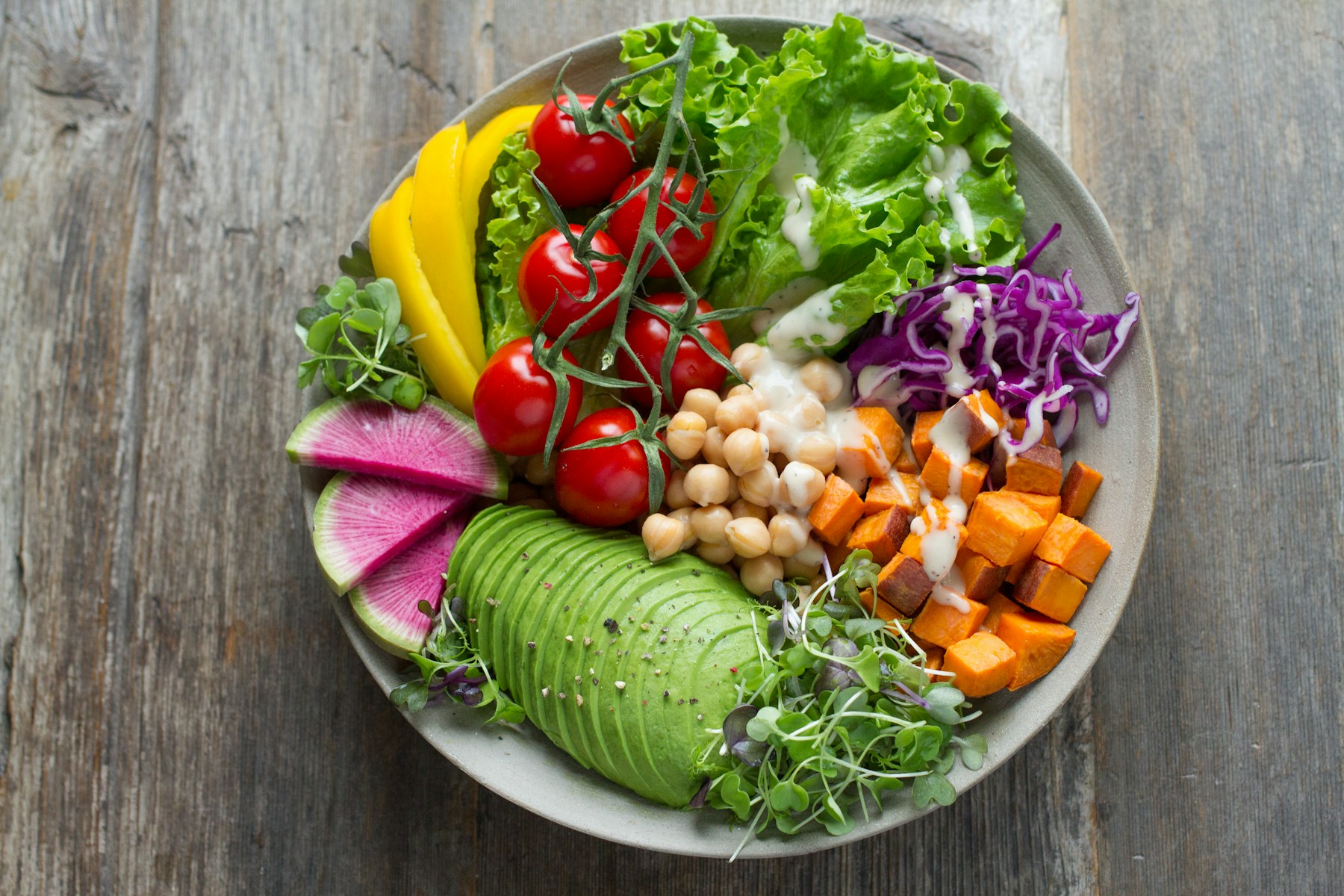
Food First, Always
Photo: Unsplash
NAC (N-Acetyl Cysteine)
A precursor to glutathione — the body's master antioxidant. Has strong evidence for specific conditions (liver protection, respiratory function, OCD). As a general longevity supplement, the evidence is promising but not definitive. May blunt some training adaptations at high doses — time carefully relative to workouts.
600–1,800 mg daily
Lion's Mane Mushroom
Contains hericenones and erinacines that stimulate nerve growth factor (NGF). Human trials are still limited, but the mechanistic evidence for neuroplasticity support is compelling. The most rigorous study to date showed meaningful improvements in mild cognitive impairment. Look for extracts standardised to beta-glucan content.
500–1,000 mg extract daily
Rhodiola Rosea
A well-studied adaptogen with particular evidence for reducing mental fatigue and improving performance under stress. Works quickly — effects often felt within days. Best cycled rather than used continuously. The SHR-5 extract has the most clinical backing.
200–400 mg, mornings
Taurine
A 2023 study in Science found that taurine levels decline significantly with age in mammals, and that restoring taurine extended median lifespan in mice by up to 12%. Human trials are ongoing, but taurine has an excellent safety profile and may support cardiovascular and mitochondrial health.
1–3g daily
"Most people would do better spending money on whole foods, a gym membership, and a good mattress than on a supplement stack."
— A sentiment shared by most serious longevity researchers
Key Takeaways
- Vitamin D₃, Magnesium, Omega-3s, and Creatine have the strongest evidence base and are relevant to most adults.
- Ashwagandha, Berberine, and Collagen are well-supported for specific goals — stress, metabolic health, and joint integrity respectively.
- Tier 3 compounds are promising but require more human data. They're reasonable additions for those already optimising the basics.
- Get baseline bloodwork before supplementing. Deficiency-based supplementation is far more defensible than prophylactic stacking.
- Third-party testing (NSF, Informed Sport, USP) matters — the supplement industry is poorly regulated and label accuracy varies widely.